

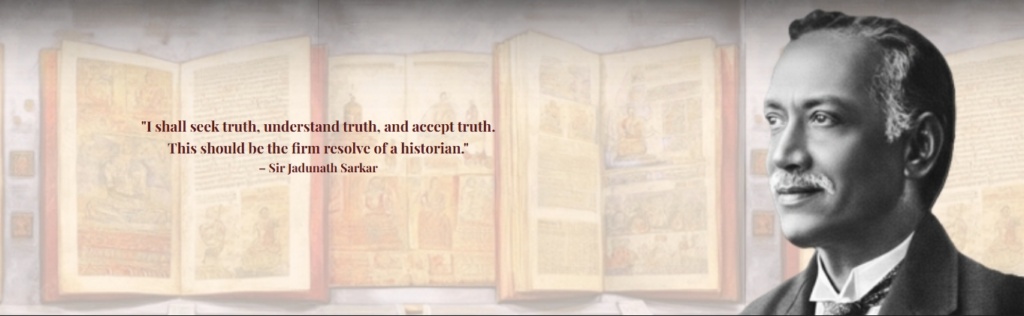
This should be the firm resolve of a historian."
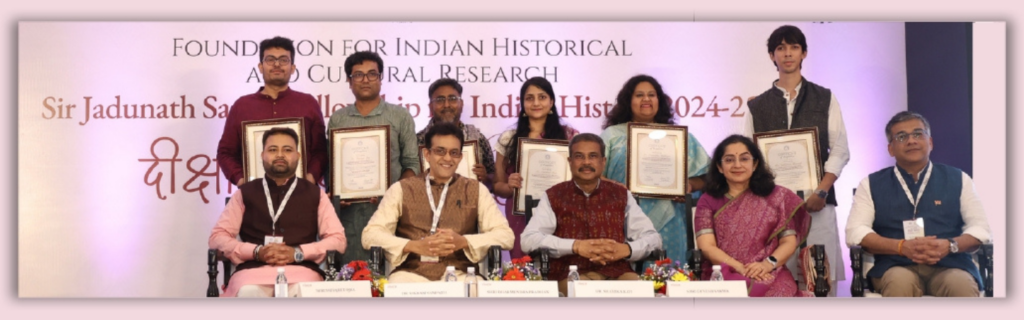
Sir Jadunath Sarkar Fellowship for Indian History
A one-year book fellowship for supporting rigorous, evidence-based research on India from ancient times to the present.
Sir Jadunath Sarkar, Fellow of the Royal Asiatic Society of Great Britain and Ireland (1870–1958), stands among the greatest Indian historians of his generation, an erudite scholar whose works established a tradition of honest, rigorous, and scholarly historiography. A master of Persian and a pioneering authority on medieval India and Mughal history, he produced seminal historical writings in English that shaped modern historical understanding. He served as Vice-Chancellor of the University of Calcutta (1926–1928) and was knighted by the British Government in 1929.
FIHCR pays tribute to this stellar historian by instituting a Fellowship in his name to nurture the spirit of disciplined inquiry, integrity of method, and evidentiary truth that defined his life’s work.
OBJECTIVES
Sir Jadunath Sarkar Fellowship for Indian History (SJSFIH) invites historians, researchers, and writers to undertake a one-year, fully funded project to produce a monograph on Indian history. Established by the Foundation for Indian Historical and Cultural Research (FIHCR), the fellowship encourages new writings on Indian history by supporting evidence-based scholarship that challenges overtly ideological narratives. The fellowship prefers historical inquiry through lesser-engaged archives that strengthen voices from India’s diverse regions, languages, and communities.
Our objective is to support historical research that is both academically rigorous and yet accessible to a wider readership. The fellowship funds independent researchers, writers and professionals alike, enabling them to focus on a single, substantial history project across any period from Ancient India to the post-independence era. Through mentorship, peer networks, and structured milestones, SJSFIH aims to build a community of historians committed to writing India’s past with integrity, nuance, and originality.
WHY THIS FELLOWSHIP IS UNIQUE
Evidence-Driven History Across All Periods:
From Ancient India to the post-independence era, we support research grounded in primary sources, archival work, and rigorous methodology.
Indian History by Indians:
We prioritise projects that challenge clear ideological lenses and believe in evidence-based documentation to recover and retrieve marginalised voices, and explore under-documented regions, communities, and themes.
Book-Length Manuscript in One Year:
Structured milestones, editorial guidance, and peer feedback ensure you complete a substantial, publication-ready work.
Mentorship & Community:
Join a cohort of historians, archivists, and writers; access editorial support, research sessions, and connections with alumni, publishers and academic networks.
Full Funding & Flexibility:
A grant of ₹15 lakh covers research, travel, and living costs, with flexibility to allocate funds according to your project’s needs.
FELLOWSHIP THEMES & SCOPE
Currently, the Fellowship is being awarded under five thematic categories:
- Ancient Indian History
- Medieval Indian History
- Modern Indian History
- Indian Freedom Movement
- Post-Independence Indian History
Scope of Projects:
We welcome a wide range of historical approaches and formats, including:
- Monographs based on archival research
- Regional and local histories
- Biographies of under-recognised historical figures
- Thematic studies (economic, social, cultural, military history)
- Public-facing narrative histories that make scholarship accessible to wider readers
- Interdisciplinary approaches that combine history with anthropology, literature, or related fields, provided they are grounded in rigorous historical methodology
- All projects must be evidence-based, drawing on primary sources, archives, or original fieldwork, and must contribute meaningfully to our understanding of India’s past.
IMPORTANT DATES FOR FELLOWSHIP BATCH-3
- 5 March 2026: Announcement of SJSFIH Batch-3
- 31 March 2026: Closing Date for Submission of Proposals
- April & May 2026: Shortlisting of Candidates
- June 2026: Interviews of shortlisted candidates
- August 2026: Final selection, fellowship announcement, and completion of formalities
- 1 September 2026: Commencement of the fellowship
ELIGIBILITY
The Fellowship is open to:
- Independent scholars
- Authors with a demonstrated interest in historical research
- Academics
- PhD candidates (given that their fellowship proposal is different from their thesis)
Applicants must:
- Be Indian citizens or Persons of Indian Origin (PIO)
- Demonstrate a strong academic or professional background in history or related humanities disciplines
- Propose a project that can realistically be completed within the one-year fellowship period
- Commit to producing a book-length manuscript (minimum 75,000 words) by the end of the fellowship
Note: Current recipients of other major fellowships or full-time academic positions may apply, provided they can dedicate the necessary time to the fellowship and associated processes.
APPLICATION & PROPOSAL REQUIREMENTS
Your application must include the following components:
Research Proposal (5-7 pages) including:
Title: Clear and descriptive title of your project
Abstract: A concise summary (500 words) of your research question, its significance and contemporary relevance.
Background & Literature Review: Context for your project, including existing scholarship and research gaps that your work addresses, and how it makes a significant and original contribution to the literature.
A Brief note on the USP: A concise statement (in 250 words) explaining what makes the book proposal unique, interesting, and different from competitors, justifying why it deserves to be published and read.
Research Questions: The specific historical questions your project seeks to answer
Methodology: Your approach to research (archival work, oral history, quantitative analysis, etc.)
Sources & Archives: Primary and secondary sources you will consult; archives or collections you plan to visit.
Chapter Outline: Tentative structure of your manuscript (5–8 chapters)
Timeline: A realistic work plan structured over a fixed period of 12 months, covering research, writing, and revision phases.
Note: Your proposal must be sharply focused and demonstrate that the project can be completed within one year.
Curriculum Vitae (CV): Your educational background, research experience, publications (if any), and relevant professional experience.
Writing Sample (3,000–5,000 words): A sample of your academic or narrative writing that demonstrates your research and writing skills. This can be an excerpt from a thesis, an article, or an essay.
Budget Plan: A brief budget outline showing how you plan to use the ₹15 lakh grant (e.g., research travel, archival fees, living expenses, equipment, translation costs).
Two Letters of Recommendation: From scholars, researchers, or professionals who can speak to your research capabilities and commitment to the project.
Submission: All materials must be submitted via the online application form by 31st March 2026.
SELECTION PROCESS
Applications will be reviewed by a Selection Committee comprising historians, the research team, scholars, and members of FIHCR’s academic advisory board.
Selection Criteria:
- Originality and significance of the research question
- Strength of methodology and use of primary sources
- Feasibility of completing the project within one year
- Quality of writing sample and academic/professional background
- Potential contribution to Indian historiography and broader public understanding
- Shortlisted candidates will be invited for interviews in June 2026. Applicants will be informed of the final decisions by early August 2026.
MENTORSHIP & ECOSYSTEM SUPPORT
The SJSFIH Fellowship is more than just a grant; it’s a comprehensive support system designed to help you produce a publication-ready manuscript.
What We Provide:
Editorial Guidance: One-on-one feedback on chapter drafts, argument structure, citation practices, and narrative style from experienced historians and editors.
Research Networks: Access to FIHCR’s network of historians and researchers across India. Connect with specialists in your period or region for guidance and collaboration.
Sessions: Participate in workshops on archival research methods, digital humanities tools, and writing for both academic and general audiences.
Peer Community: Join a cohort of fellows working on diverse historical projects.
Publication Pathways: While FIHCR does not guarantee publication, we actively facilitate connections with publishers, trade presses, and literary agents. We provide guidance on book proposals, query letters, and navigating the publishing process.
Public Engagement Opportunities: Present your work at FIHCR-hosted conferences, public lectures, and digital platforms. Build visibility for your research within academic and public history communities.
FELLOWSHIP COMMUNITY
As an SJSFIH Fellow, you become part of a growing national network of historians and researchers committed to rigorous, evidence-based scholarship on India’s past.
Each batch of fellows forms a cohort that meets regularly throughout the fellowship year to share progress, exchange feedback, and engage in collaborative discussions. Apart from your own batch, you will have opportunities to connect with alumni.
As our fellowship program grows, we are building a repository of published works by SJSFIH alumni. These publications represent the tangible impact of the fellowship and serve as inspiration for future cohorts.
Joining SJSFIH means joining a community that will support your work long after your fellowship year ends.
JOURNEY OF A FELLOW
The fellowship year is structured around six phases, designed to guide you from initial research to a completed manuscript.
- Orientation Week (pre-commencement)
- Literature Review
- Budget Utilisation Plan
- Roadmap
- Refined Chapter Outline
- Draft of one or more chapters (minimum 10,000 words, whichever is greater).
- Fieldwork summary (if applicable)
- Draft of three or more chapters (minimum 30,000 words in total).
- Seminar / Mid-Year Presentation
- Draft Manuscript
- Complete manuscript (≥ 75,000 words)
Updated Fund Utilisation Report
FREQUENTLY ASKED QUESTIONS
Who is eligible to apply?
Indian citizens and Persons of Indian Origin with a demonstrated background in history or related humanities disciplines. This includes independent scholars, early- and mid-career researchers, authors, and PhD candidates (if the fellowship project is distinct from their thesis).
What periods of Indian history does the fellowship cover?
All periods, Ancient, Medieval, Modern, Freedom Movement and Post-Independence Indian History. We welcome projects from any historical period, provided they are grounded in rigorous research and primary sources.
How much is the fellowship grant, and how is it disbursed?
The fellowship provides ₹15 lakh over one year. Disbursement is tied to milestone completion (detailed in the Fellowship Handbook). Fellows have flexibility in allocating funds for research travel, archival fees, living expenses, equipment, and other project needs.
How long is the fellowship?
One year (12 months), beginning in September 2026 for Batch-3.
Can I apply if I already hold another fellowship or a full-time academic position?
Full-time academics can be applicants provided they commit fully to the requirements of the fellowship. Those who hold another fellowship cannot apply until they have completed their engagement or left it. We do not encourage a dual fellowship scenario.
Can I work on a collaborative project?
Yes. Collaborative projects, with a maximum of two to three co-authors, are welcome.
Approval of collaborative proposals will be considered on a case-by-case basis.
What is the expected output?
A research monograph of a minimum of 75,000 words, suitable for publication. The manuscript should be original, research-based, and contribute meaningfully to Indian historiography.
Does FIHCR guarantee publication?
No. However, FIHCR actively supports fellows in connecting with publishers, agents, and academic presses. We provide guidance on book proposals, publishing pathways, and public dissemination of your work.
Who owns the copyright to the completed work?
The fellow retains full copyright and intellectual property rights. FIHCR may request permission to showcase the work in fellowship publications or digital repositories, provided proper attribution is given. The fellow is expected to acknowledge FIHCR as the funder in their book and to work with their publisher to include the “Supported by FIHCR” information inside the book.
How do I contact FIHCR for more information?
Email us at [email protected] or visit our website at www.fihcr.org. We’re happy to answer questions about eligibility, application requirements, or the fellowship experience.
APPLY NOW & CONTACT
Ready to Apply?
The application window for Batch 3 is open from March 5 to March 31, 2026. Submit your application, including your research proposal, CV, writing sample, budget plan, and recommendation letters, through our online portal:
Questions or Need Help?
If you have questions about the fellowship, eligibility, or application process, please contact us:
Email: [email protected]
We look forward to receiving your application and supporting your journey in writing India’s history.