

One of the most fascinating aspects of Indian architecture is its advanced understanding of sound and acoustics. Across different regions and periods, architects and craftsmen incorporated acoustic principles into the design of temples, forts, and monumental structures, creating spaces where music, and architecture came together in ingenious ways. By encouraging young learners to explore these lesser-known aspects, monuments can be transformed into classrooms where history, science, mathematics, music, and art come together.
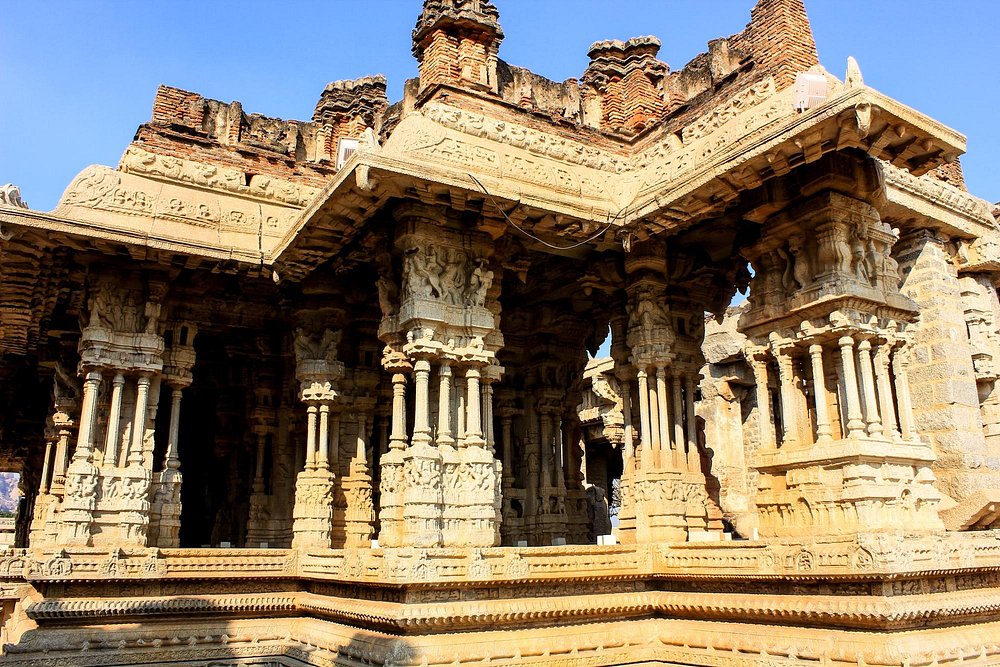
Among the most celebrated acoustic marvels in India are the musical pillars of the Vittala Temple at Hampi, a UNESCO World Heritage Site in Karnataka. The Ranga Maṇḍapa (performance hall) of the temple contains 56 slender granite pillars, popularly known as the SaReGaMa pillars. Each composite pillar consists of a larger central shaft surrounded by a cluster of thinner resonating columns. All the pillars are carved from a single block of stone. When tapped, these pillars produce different sounds resembling the seven musical notes as well as the sounds of various Indian instruments like the ghaṇṭa (bell), ḍamaru (hand-held drum), and mṛdaṅgaṁ (double-sided drum). Although researchers continue to study the precise science behind their acoustic properties, many believe that the sounds result from carefully calculated dimensions, density, and resonance rather than from hidden chambers or metallic inserts. Today, visitors are no longer permitted to strike the pillars, as repeated tapping over the centuries has caused damage to this extraordinary architectural feature.
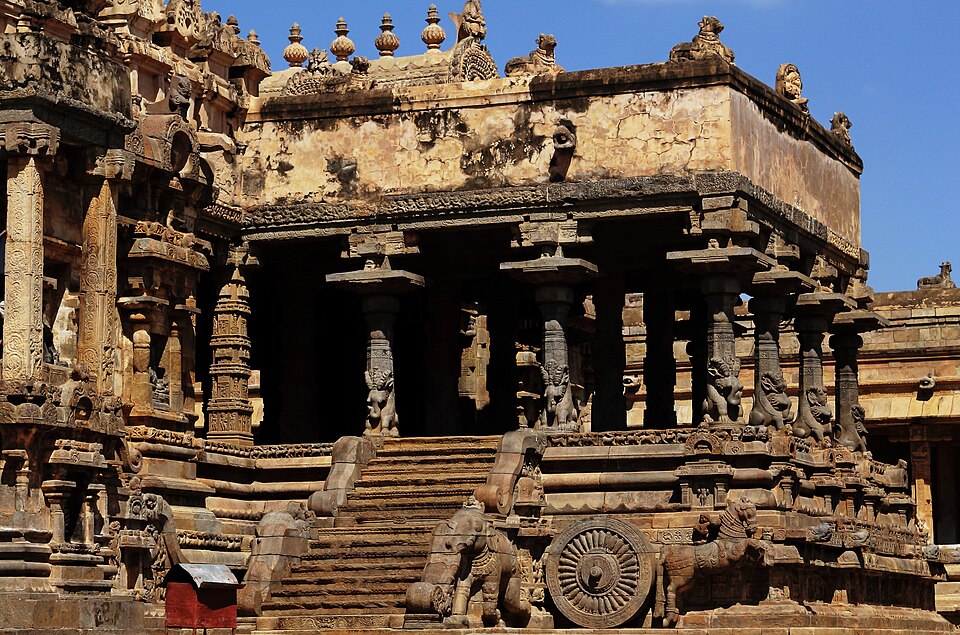
A similar architectural innovation can be seen at the Airavatesvara Temple in Tamil Nadu, a UNESCO World Heritage Site built during the Chola period. Just behind the Nandi maṇḍapa, a short flight of granite steps leads to the Balipīṭham (sacrificial altar). Known as the Sapta Swara Padalgal or Singing Steps, these ornately carved steps are among the most remarkable examples of acoustic engineering in Indian temple architecture. Each step is believed to represent one of the seven swaras (notes) of Carnatic music, and it produces a distinct musical note when tapped. Whether every step originally corresponded to a complete musical scale remains a subject of scholarly discussion, but the phenomenon itself indicates a complex understanding of acoustic principles and architectural ingenuity.
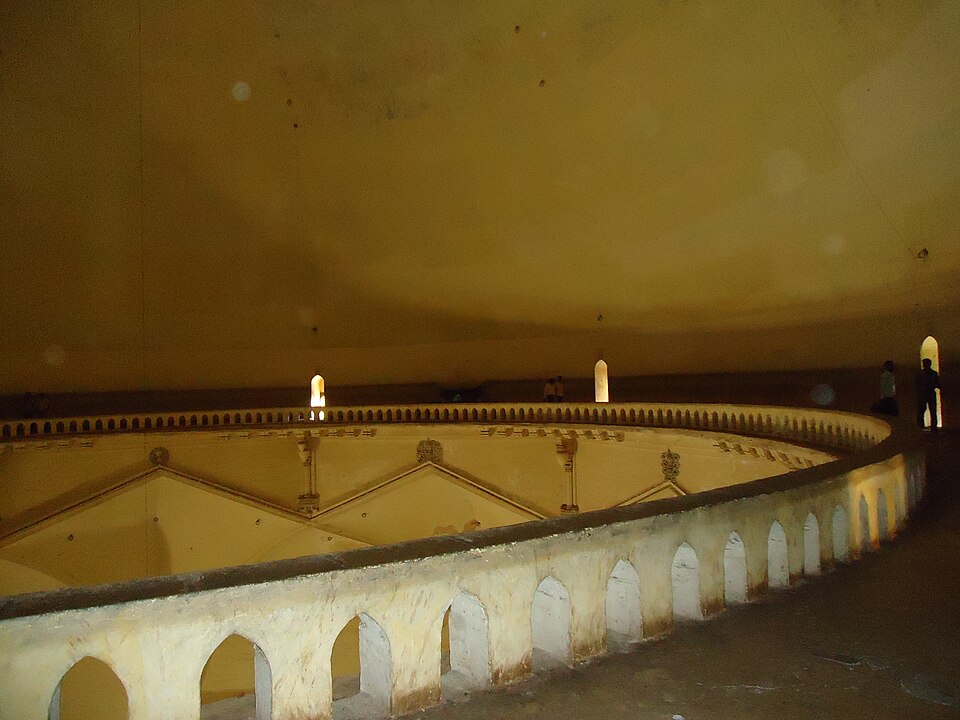
Moving from music to acoustics, the Gol Gumbaz at Vijayapura (Bijapur) presents one of India’s most remarkable engineering achievements. The vast dome of the monument houses the famous Whispering Gallery, where even a whisper spoken near one side of the circular gallery can be heard clearly on the opposite side. This fascinating phenomenon is made possible by specific geometrical calculations within the enclosed space. The acoustics create multiple echoes and allow sound waves to travel with exceptional clarity.
Similar stories of innovation can be found across the country, each offering a unique perspective on the creativity and technical expertise of its builders. The musical pillars of Hampi, the Singing Steps of the Airavatesvara Temple, and the remarkable acoustics of the Gol Gumbaz remind us that India’s monuments are far more than records of political history. They preserve glimpses of artistic imagination and technological innovation that continue to inspire us even today.
Historical monuments are among the most tangible connections to our past. They preserve stories of kingdoms, dynasties, artistic traditions, and technological achievements, offering invaluable insights into the development of Indian civilisation. However, the study of monuments is often limited to questions of who built them, when they were constructed, and the dynasties they represent. While these aspects are undoubtedly important, they sometimes overshadow the many fascinating features that make these monuments stand out. Beyond their political history, India’s monuments reveal extraordinary achievements in engineering, science, mathematics, music, and artistic innovation. By encouraging young learners to look beyond dates and dynasties and engage with these fascinating aspects of our built heritage, we can spark their curiosity in the subject and foster critical thinking skills.
© 2026 Foundation for Indian Historical and Cultural Research (FIHCR). All rights reserved. This article is the intellectual property of the Foundation for Indian Historical and Cultural Research (FIHCR). No part of this article may be reprinted, reproduced, or transmitted in any form or by any means, whether electronic, mechanical, photocopying, recording, or otherwise, without the prior written permission of FIHCR.