
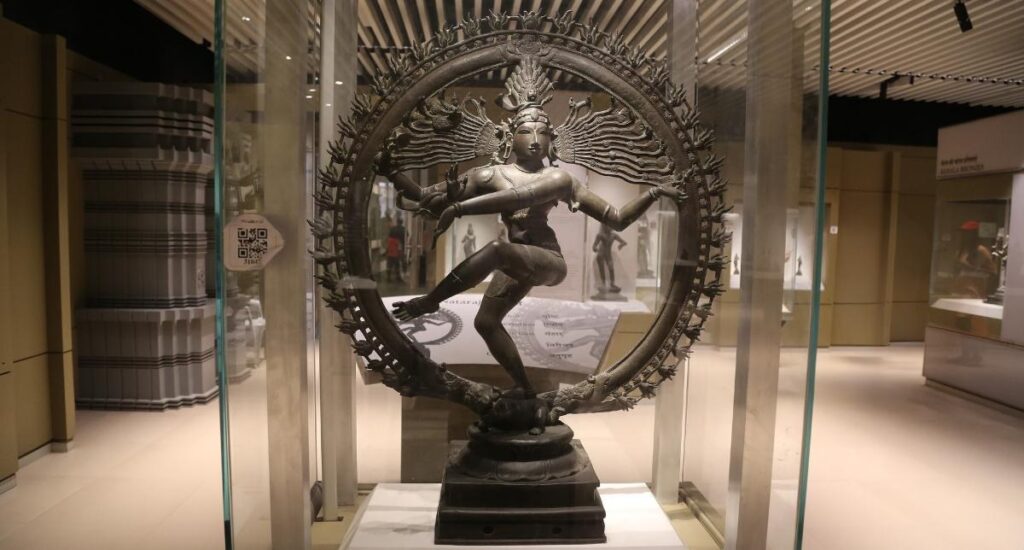
“Amongst the greatest of the names of Śiva is Naṭarāja, the Lord of Dance, or King of Actors. The cosmos is His theatre, there are many different steps in His repertory, He Himself is actor and audience.” – Ananda Coomaraswamy
Celebrated as the “Lord of Dance,” Naṭarāja is far more than a religious icon. The iconography of Naṭarāja is an elaborate visual expression of philosophy, aesthetics, cosmology, and spirituality, making it one of the most profound artistic creations of ancient India. The image reached its most celebrated form in the bronze sculptures of the Chola period, particularly in Tamil Nadu. Yet its significance extends far beyond a specific historical period or artistic tradition.
For centuries, philosophers, theologians, dancers, artists, and scholars have viewed the Naṭarāja image as a symbolic representation of the universe itself. Every component of this composition carries symbolic meaning. At the heart of the iconography is Śiva performing the Ānanda Tāṇḍava, the Dance of Bliss. The image captures a moment of eternal rhythm, suggesting that creation is not a static event but an ongoing process. In the philosophical tradition of Śaiva Siddhānta, Śiva is regarded as the supreme reality responsible for the five cosmic functions, namely, śṛṣṭi (creation), stithi (preservation), saṁhara (dissolution), triobhava (concealment), and anugraha (liberation), collectively known as Pañcakṛtya. Hence, it is through His dance that the universe is continuously created, sustained, transformed, concealed, and ultimately liberated.
One of the most remarkable aspects of the Naṭarāja image is that every gesture, attribute, and ornament contributes to a larger philosophical narrative. The upper right hand holds the ḍamaru (drum), symbolising the primordial sound from which creation emerges. In Indian thought, sound is not merely auditory, it is the fundamental vibration underlying existence itself. The drum therefore represents creation, rhythm, and the unfolding of the cosmos. The upper left hand carries agnī (fire), representing dissolution and transformation. Creation and destruction are not opposing forces but complementary aspects of cosmic balance. The fire reminds viewers that change is essential for renewal and regeneration. The lower right hand is displayed in abhaya mudrā, the gesture of reassurance and protection. The lower left hand extends across the body in gaja hasta, directing attention toward the raised left foot. This gesture serves as a visual guide, indicating the path to spiritual liberation. The raised foot itself is among the most important elements of the iconography of Naṭarāja. It symbolises release from worldly bondage and the possibility of attaining higher knowledge and freedom. This posture is described in ancient dance and iconographic texts as the Bhujangatrāsita posture, in which the dancer appears to lift the leg suddenly, as though startled by a serpent.
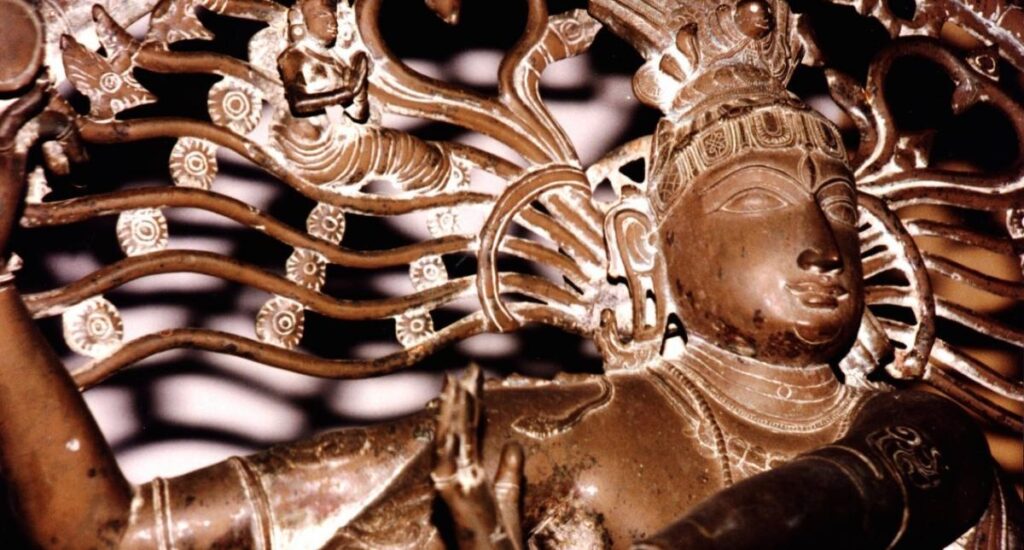
Beneath Śiva’s firmly planted right foot lies a dwarf-like figure known as Apasmāra Puruṣa, often identified as Muyalaka in Tamil traditions. Apasmāra represents avidyā (ignorance) and māyā (delusion). By dancing upon this figure, Śiva demonstrates the triumph of wisdom over ignorance and knowledge over illusion. The image conveys a central message of Indian philosophical thought wherein liberation becomes possible only when ignorance is overcome. This symbolism resonates strongly with the teachings of Advaita Vedānta of Śaṅkarāchārya as well. The subjugation of Apasmāra therefore represents not merely victory over evil but the awakening of consciousness.
Perhaps the most visually striking feature of the Naṭarāja image is the flaming arch surrounding the deity, which is a distinguishing feature of the Chola bronzes. Interpretations of this arch vary across textual traditions. Some Śaiva texts describe it as the manifestation of the sacred syllable Om, while others associate it with Prakṛti (primordial nature), making Śiva the innate Puruṣa (true Self). Śiva dances within this fiery ring yet simultaneously transcends it. The image therefore, expresses the philosophical idea that the divine exists both within the universe and beyond it.
Ultimately, the symbolism of Naṭarāja reminds us that Indian art was never intended merely to decorate sacred spaces. It was designed to represent profound ideas about existence, consciousness, and the human quest for knowledge. More than a thousand years after the Chola artists cast their celebrated bronzes, Naṭarāja continues to inspire audiences across cultures. The Naṭarāja image remains a powerful symbol of India’s artistic, philosophical, and spiritual heritage, visible not only in temples and museums but also in contemporary public spaces. Notable examples include the monumental Naṭarāja installed at Bharat Mandapam, New Delhi, for the G20 Summit (2023), the Naṭarāja sculpture at the entrance of the Indira Gandhi National Centre for the Arts (IGNCA), New Delhi, and the iconic Naṭarāja image at Chennai International Airport.
References
- Coomaraswamy, A. (1918). The Dance of Shiva. The Sunwise Turn.
- Gaston, A. (1982). Śiva in Dance, Myth and Iconography. Oxford University Press.
- Kramrisch, S. (1988). The Presence of Śiva. Motilal Banarsidass.
- Krishna Sastri, H. (1916). South Indian Images of Gods and Goddesses. Government Press.
- Sivaramamurti, C. (1974). Nataraja in Art, Thought and Literature. National Museum, New Delhi.
Naṭarāja, National Museum, New Delhi