
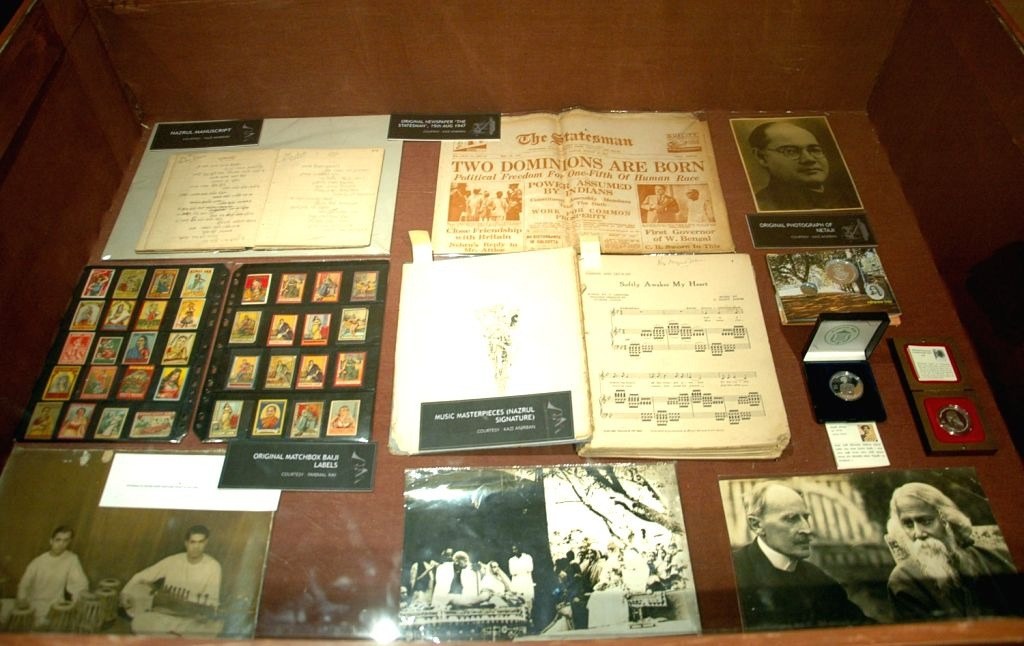
Have you ever smelled the fragrance of pages that have turned pale and fragile? Have you ever held a bundle of old files, dusty and tied with a string, and felt a small thrill run through your fingers? Have you ever had goosebumps looking at words set down long ago with a fountain pen, words that, quietly and without fuss, changed the course of history? Have you ever felt, for a few minutes, like royalty, simply by listening to a hundred-year-old thumri sung by some long-forgotten courtesan whose name we no longer remember, but whose voice we still can hear?
If you have ever wished for Tom Riddle’s diary, the one that pulls you inside its pages to show you the past, there is some good news. You do not need magic. You only need an archive!
We perhaps thought of an archive as a kind of old house. Not a ‘cold storage’ of forgotten paper, as people sometimes imagine, but a house with its windows open, its rooms full of light and wave of bibliosmia, waiting patiently for a visitor. Somewhere in one of its rooms lies a royal farman, its seal still proud after centuries. In another, a stack of colonial records, dry and official on the surface, but full of small human stories underneath. Down the corridor, tucked into tins and boxes, are photographs, films, letters and music. An archive is nothing less than a ‘Chamber of Secrets’, patiently answering questions we did not even know we carried.
And it is not monuments and archaeological sites alone that hold the past in trust. Archives, too, tell us stories of a past we had almost forgotten – quieter stories, perhaps, but no less real for that. They are veritable mines of knowledge, and who knows, as you dig through their yellowing pages, you might just unearth a Kohinoor of your own!
Of course, visiting an archive is not always easy. It asks for time we rarely have, and journeys we cannot always make. The pages are far away, in some quiet reading room, guarded by fans that creak and clerks who know every shelf by heart.
But there is another way in – one that asks only for curiosity. At the FIHCR Archives for Indian Music, someone has already done the travelling for you. The thumris, the ghazals, the forgotten voices of courtesans and classical masters, once locked away on brittle discs, have been gathered, preserved, and set free again, ready to be heard at the click of a button.
So, the next time you long for a whiff of old paper or the crackle of an old recording, you need not wait for a rainy afternoon and a train ticket. Sometimes, the past is only a doorway away.