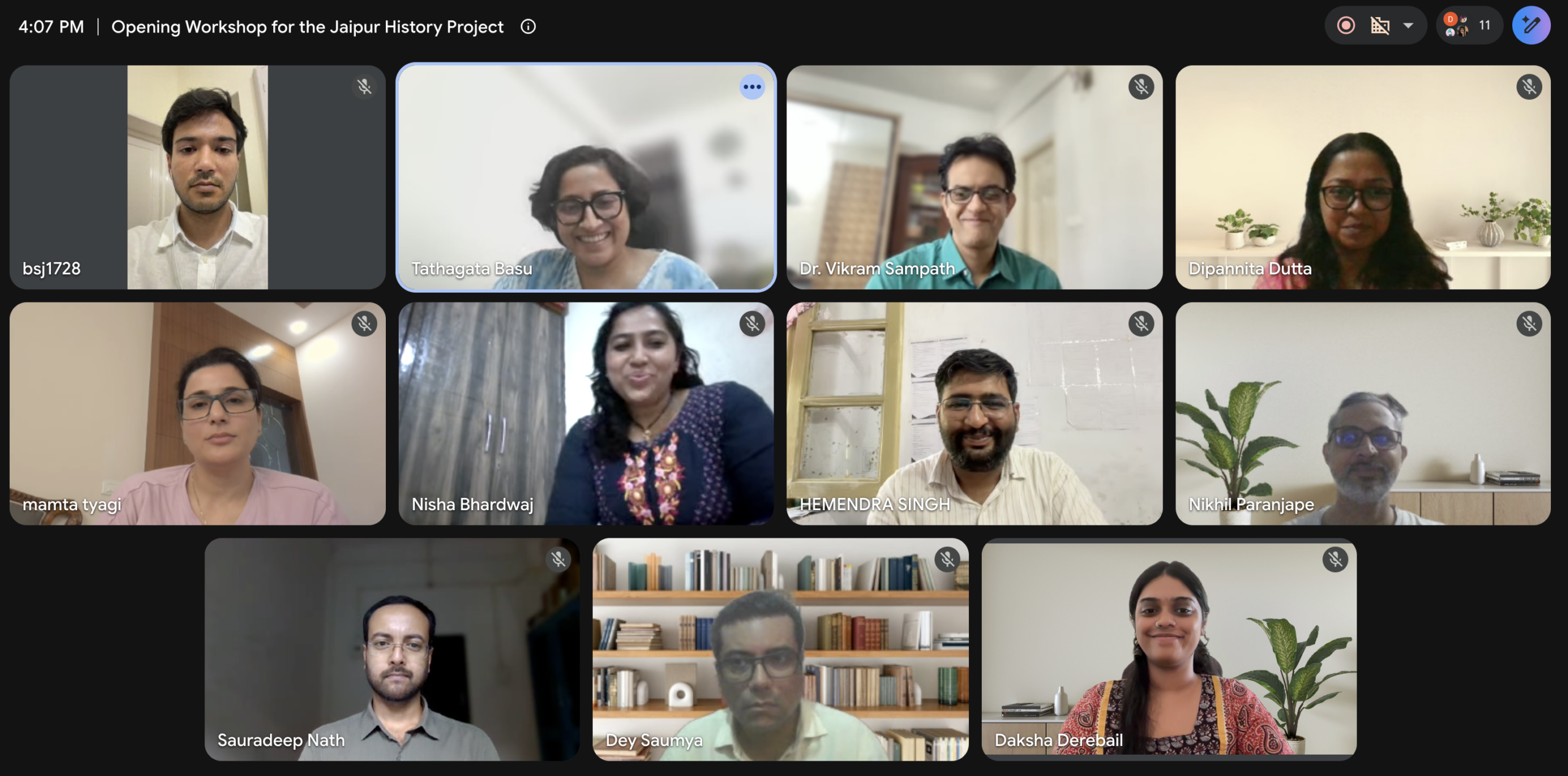
The purpose of the History of Jaipur project is to write a succinct history of the Jaipur Royal House of the Kachhwahas and how they preserved Hinduism, rebuilt or protected temples in the wake of the Islamic subjugation. This project is being supported by the Maharaja Sawai Mansingh II Museum Trust and will access rare manuscripts in Persian and Rajasthani dialects, as well as folklore to reconstruct this important period of our history.
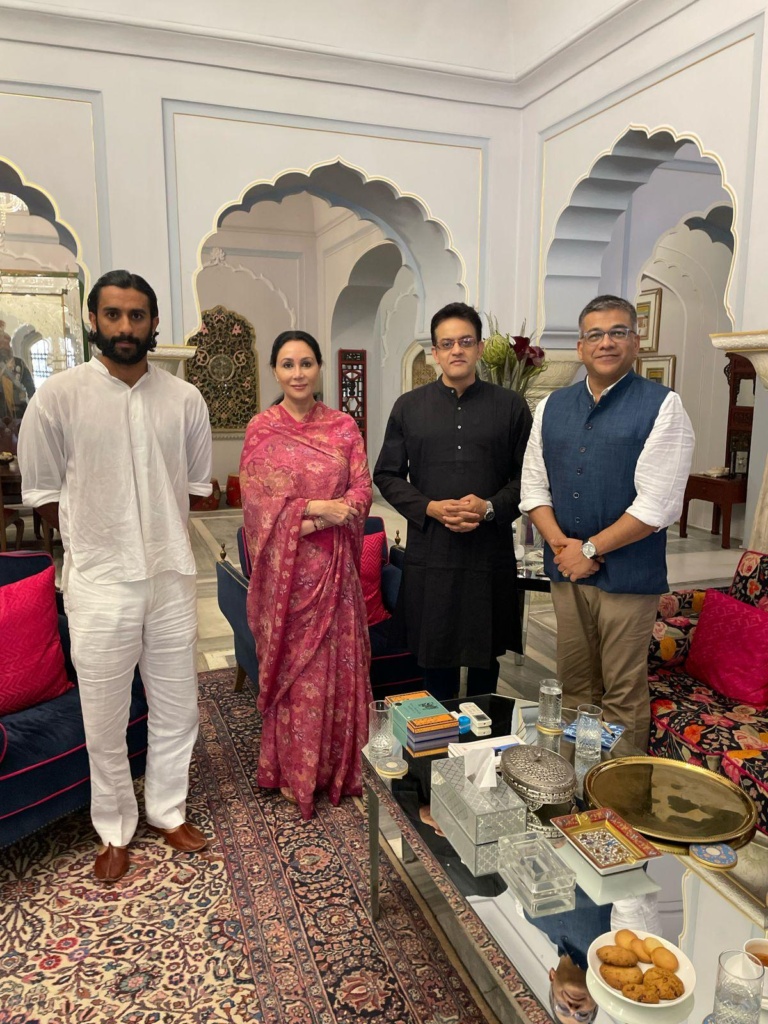
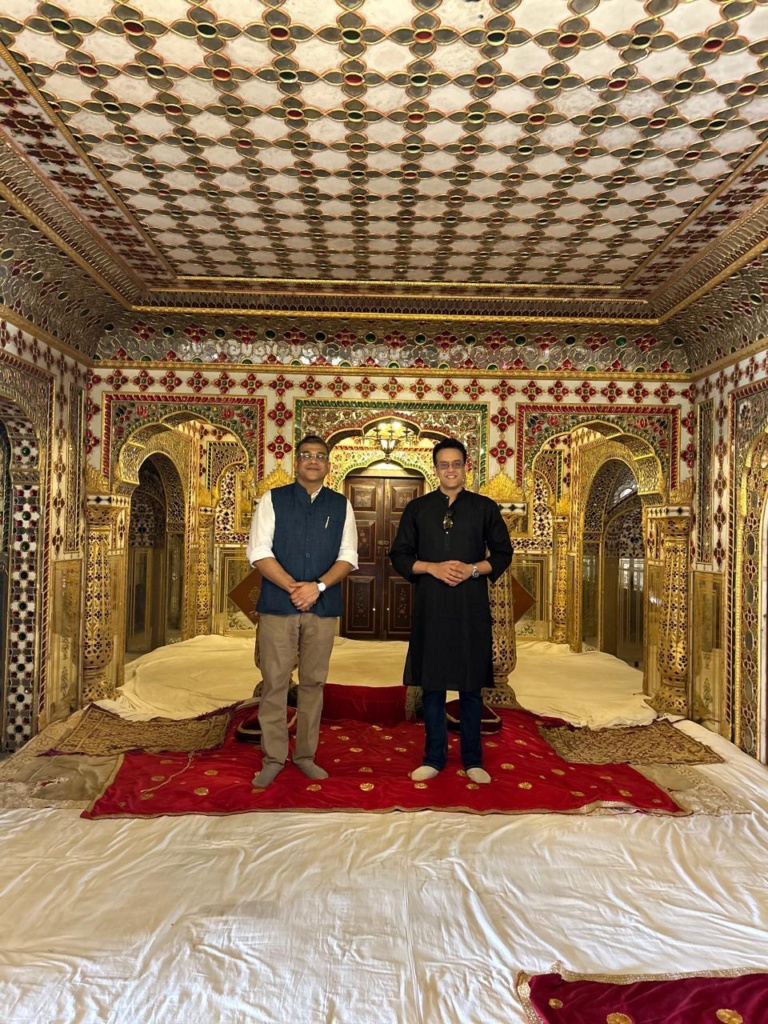
The inaugural workshop was organised as part of the Jaipur History Project, bringing together scholars and heritage practitioners to explore the history of the Kachhwaha dynasty, the rise of the Jaipur rulers, their political and cultural legacy, and the diverse sources available for reconstructing this rich past.
The workshop featured Dr Mamta Tyagi, Assistant Professor at the Ramanujan College, University of Delhi, who traced the origins of the Kachhwaha dynasty through sources such as the Kachhwaha-ri-Vanshavali and the Kurmavilas. Her presentation examined the political evolution of the dynasty from the establishment of Dhundhar to its territorial expansion under Sawai Jai Singh in the eighteenth century.
The session also included insightful presentations by Mr Bharat Singh, a Jaipur-based heritage documentarian and conservationist, who shared his extensive fieldwork on the built heritage of the former Jaipur State, and Dr Nisha Bharadwaj, a specialist in Marwari history, who explored the gendered dimensions of Rajput history and the role of Mughal–Rajput matrimonial alliances in shaping political and social relations.
Bringing together textual, archival, architectural, and social-historical perspectives, the workshop marks an important step in the ongoing Jaipur History Project, with follow-up sessions expected to build on these discussions and further enrich our understanding of Jaipur's historical legacy.